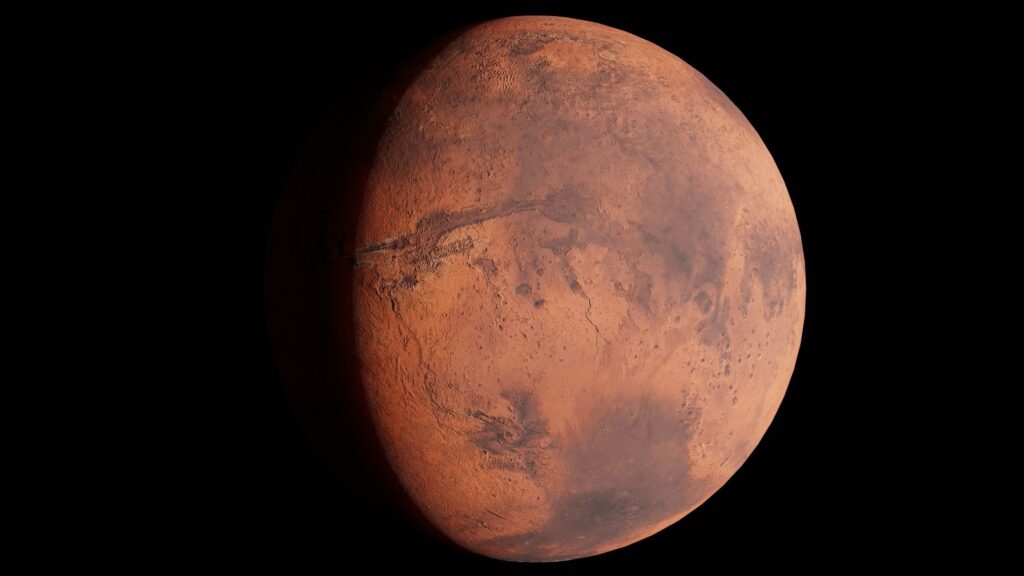

The Mars moon Phobos mission is a groundbreaking initiative aimed at collecting rocks from the Martian moon. This historic endeavor promises to enhance our knowledge of planetary formation and evolution.
Overview of the Mars Moon Phobos Mission
The Mars moon Phobos mission represents a groundbreaking opportunity for scientific discovery. Launched by Japan’s space agency, this ambitious project aims to collect samples from the surface of Phobos, one of Mars’ two moons. The mission is designed to deepen our understanding of the moon’s composition, which may hold clues to the history of the Martian system.
Key objectives of the Mars moon Phobos mission include:
- Collecting regolith samples from Phobos’ surface.
- Analyzing the moon’s geological features to unveil its origins.
- Exploring the potential for future human exploration of Mars and its moons.
By returning samples to Earth, scientists hope to gain insights that are not attainable through remote sensing. This mission is being heralded as a “once-in-a-lifetime chance” to explore a celestial body that has remained relatively untouched by human technology.
Significance of Collecting Rocks from Phobos
The Mars moon Phobos mission represents a critical opportunity for scientific advancement and exploration. Collecting rocks from Phobos is significant for several reasons:
- Understanding the Origins: Analyzing the composition of Phobos can offer insights into the formation of the Martian system and the early solar system.
- Possible Organic Material: There is a potential for discovering organic molecules, which could provide clues about the existence of life beyond Earth.
- Target for Future Exploration: Studying samples from Phobos may inform future manned missions to Mars, aiding in preparations for sustained human presence on the planet.
- Technological Advancements: The mission will push the boundaries of current space technology, enhancing our capabilities for future deep-space exploration.
By embarking on this mission, scientists hope to unlock mysteries that could redefine our understanding of both Mars and the broader cosmos, marking a significant milestone in planetary science.
How the Mission Will Be Conducted
The Mars moon Phobos mission is set to unfold through a meticulously planned series of stages aimed at maximizing scientific return. The mission will begin with a spacecraft launching from Earth, equipped with advanced instruments designed for both exploration and analysis.
Once in orbit around Phobos, the spacecraft will utilize a combination of high-resolution imaging and spectrometry to map the surface and identify key areas for sample collection. This phase is critical, as it will inform scientists about the moon’s composition and geological history.
Following the mapping, a small rover will descend to the surface to gather samples. The rover is designed to collect a variety of materials, including regolith and rock fragments, which will provide insights into the early solar system.
Finally, the samples will be sealed in a return capsule and launched back to Earth for detailed analysis. This Mars moon Phobos mission presents a once-in-a-lifetime opportunity to enhance our understanding of planetary formation and evolution.
Challenges Faced in Space Exploration
The Mars moon Phobos mission presents several challenges that scientists and engineers must navigate to ensure its success. These obstacles include the harsh environment of space, which can affect both the spacecraft and the instruments onboard.
- Radiation Exposure: Spacecraft traveling to Phobos must endure high levels of cosmic radiation, which can damage electronic components and compromise mission data.
- Communication Delays: The vast distance between Earth and Mars means that signals can take several minutes to transmit, complicating real-time decision-making during critical mission phases.
- Landing Precision: Achieving a soft landing on the uneven surface of Phobos is a significant hurdle, as any miscalculation could jeopardize the collection of samples.
- Sample Retrieval: The process of collecting and securely storing samples from Phobos requires advanced technology and meticulous planning to avoid contamination.
Despite these challenges, the Mars moon Phobos mission remains a proven opportunity for discovery, promising insights into the origins of our solar system and the potential for future exploration.
Future Implications for Mars Research
The successful completion of the Mars moon Phobos mission could reshape our understanding of the Martian system and the origins of life on Earth. As researchers analyze the samples collected from Phobos, several implications for future Mars research are likely to emerge.
- Enhanced Knowledge of Martian History: The geological composition of Phobos may provide critical insights into the history of Mars itself, including its climatic and environmental evolution.
- Astrobiological Insights: Investigating the samples could reveal organic compounds, contributing to our understanding of whether life ever existed on Mars.
- Future Missions: The data gathered could inform the design and objectives of upcoming missions to Mars, paving the way for human exploration and habitation.
- Technological Advancements: The technologies developed for the Mars moon Phobos mission may have applications beyond space exploration, benefiting other scientific fields.
In conclusion, the Mars moon Phobos mission stands as a pivotal step toward unlocking the mysteries of our neighboring planet and its moons.
Photo by Zelch Csaba on Pexels